






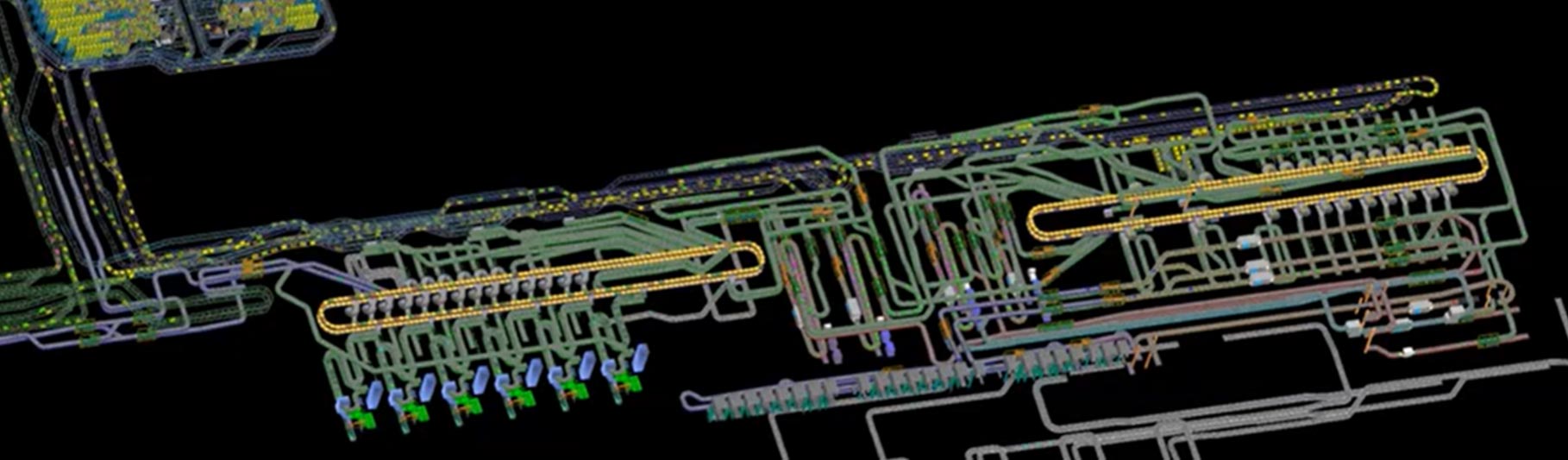
合作出成果:从大型项目到中等规模的成功。.
在建立良好声誉的同时,我们的目标是展示我们为中型项目提供高性价比解决方案的能力,向客户传授最新技术,确保他们取得长期成功。我们优先考虑与客户建立关系,而不仅仅是客户,经常与机场规划和开发部门的小型团队密切合作,以提供卓越的成果。.


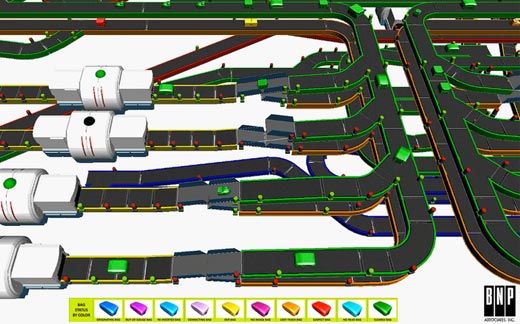
The development of models for outbound baggage systems is a significant focus of our simulation team. We generally conduct two types of simulations:
When simulating an outbound baggage system, various components must be considered:
Realistic demand forecasting is crucial when modeling a baggage system. A bag-by-bag forecast of passengers and bags arriving at check-in counters is developed using either historical airport/air carrier arrival patterns or arrival distributions endorsed by TSA. For transfer bags, we utilize arrival and departure schedules, along with historical hourly data on connection times, to build a flight-to-flight forecast. This helps accurately assess how long a bag remains in the baggage system, which is essential for sizing outbound bagrooms, bag stores, and batching stations.
Using 3D simulation software (such as AutoMod and Simulate 3D), BNP creates a digital twin of the baggage system. These models reflect the existing or proposed layout and operational characteristics of each component.
The components typically include:
For existing systems, models are validated against historical performance data. For new systems, validation is conducted by reviewing the simulation’s performance with system experts.
Where applicable, the models may also include both inbound and outbound transfer ramp vehicles that deliver bags from the bagroom to aircraft and vice versa. The models help evaluate the system’s ability to meet defined performance goals under various conditions, such as:
For design improvements or alternatives proposed by BNP, iterative evaluations are performed with the Design Team to ensure the baggage system meets the required performance goals.
不适用
不适用
不适用
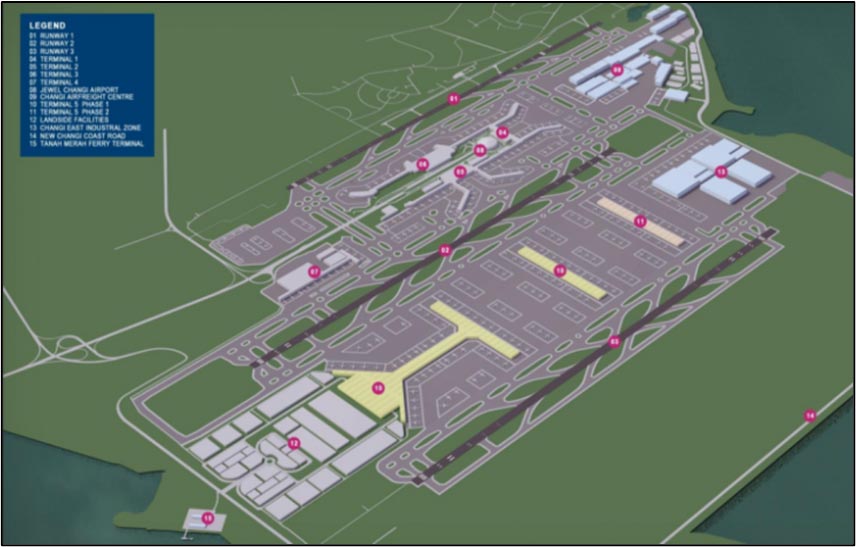
亚洲
BNP 受樟宜机场集团 (CAG) 委托,为新 5 号航站楼的新行李处理系统 (BHS) 提供咨询服务,这是樟宜国际机场扩建计划的一部分。.
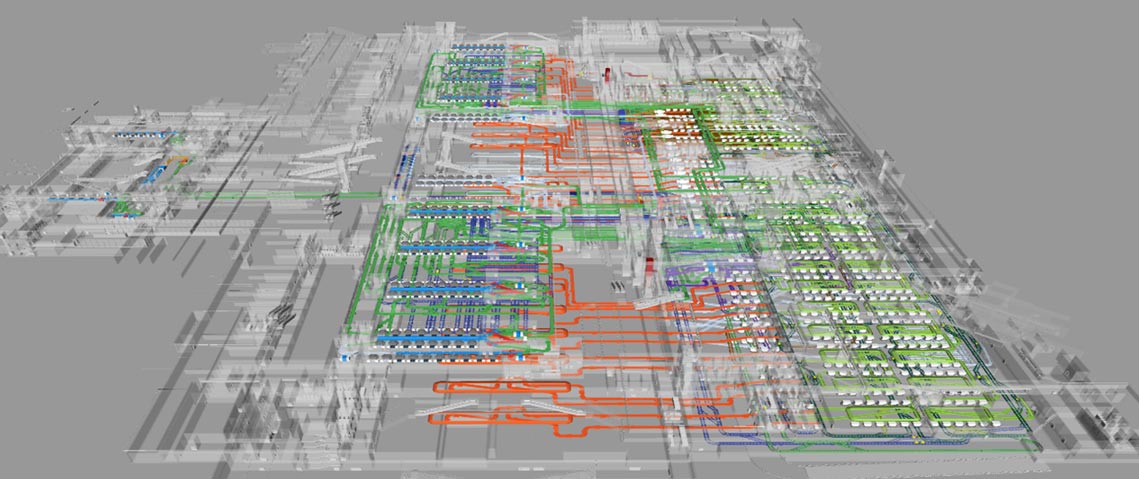
亚洲
BNP 已受聘为新航站楼设计行李处理系统 (BHS)。设计范围包括所有行李系统的概念设计和详细设计,将 GTC 集成到航站楼的行李网络,以及规划未来与卫星航站楼的连接。.
BNP Associates, Inc. 是为航空运输和物流业提供专业咨询服务的全球领先企业。.