Aller au contenu Page sur la protection de la vie privée
Retour aux projets

Energy Management Studies

Tools for Identifying Energy Cost Savings

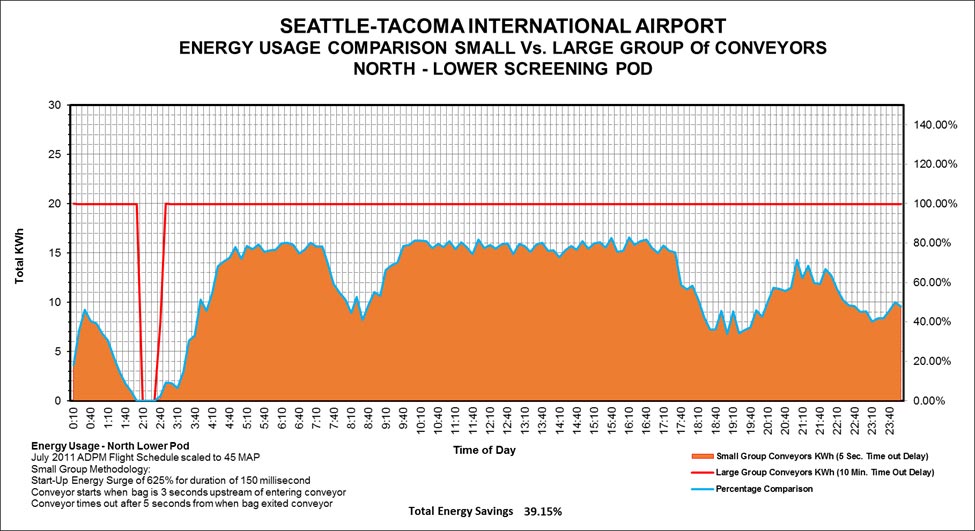
image overlay Chart showing energy usage comparison between small and large conveyor groups at Seattle-Tacoma International Airport.

Vue d'ensemble

The electrical power required by motors to operate conveyors in a baggage handling system (BHS) is essential for designing the overall BHS. In many systems, numerous conveyors grouped into zones are started simultaneously due to the motor control configuration, such as soft starters, known as Zone Methodology. In this configuration, multiple conveyors are activated simultaneously, and they run continuously until the zone has been cleared of bags for a specified period, typically 10 minutes or more. This approach can result in running a large number of conveyors to transport a small number of bags during off-peak hours. The implementation of Variable Frequency Drives (VFDs) throughout the BHS eliminates the need for conveyor zones, allowing for targeted control and increasing energy efficiency by running motors only when necessary.

Small Group Methodology

An alternative zoning strategy is the Small Group Methodology, where conveyors run only when bags are present. Downstream conveyors are activated seconds before bags reach them and deactivate a few seconds after the last bag exits. This method reduces unnecessary conveyor operation and achieves significant energy savings.

Simulation and Verification

BNP uses simulation to verify the benefits of the Small Group Methodology. This approach involves activating motors when a bag approaches within a certain distance (configurable to three seconds of travel time) and deactivating them after the last bag exits the conveyor, with varying sleep delays (1, 2, 3, 5, and 600 seconds) examined. In contrast, the Zone Methodology simulation set a fixed sleep delay of 600 seconds for all conveyors. Energy consumption for each method was calculated over a 24-hour period.

Results

The bag systems have been simulated using the Zone Method and the Small Group Method to quantify the runtime and the number of starts and stops of each conveyor. This data, combined with the motor energy requirements, is used to estimate the daily energy consumption of each approach. Simulations have identified opportunities to reduce airport energy costs by up to 33%. The graph below depicts the energy utilization for each methodology over the 24-hour study interval, showing significant energy savings with the application of the Small Group Methodology.


Début du projet

N/A

Client

N/A

Étendue des services

  • Energy Savings
  • Analyse des données
  • Operational Modeling Tool
  • Simulation

Région

N/A

Histoires de réussite en matière de simulation

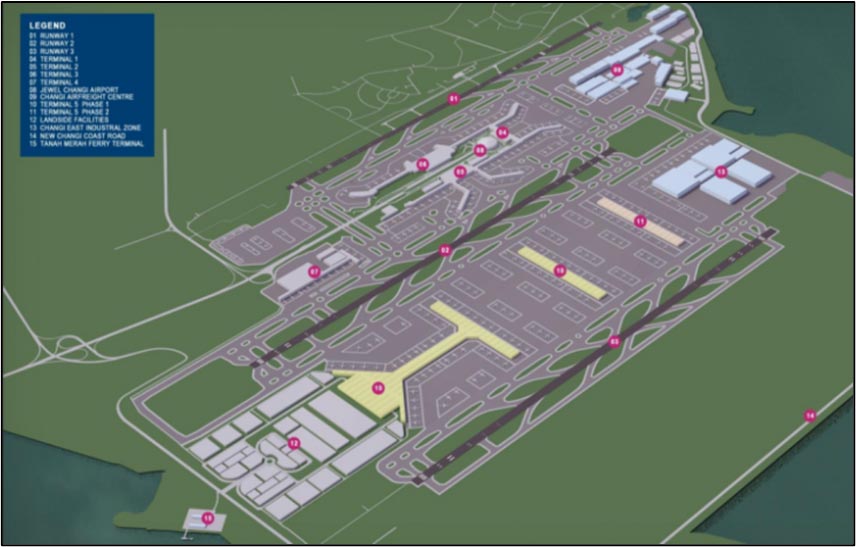
image overlay Changi International Airport (SIN) Terminal 5 Baggage Handling Systems
Systèmes de traitement des bagages

Asie

Aéroport international de Changi (SIN) Terminal 5 Systèmes de traitement des bagages

BNP a été engagé par Changi Airport Group (CAG) pour fournir des services de conseil pour le nouveau système de traitement des bagages (BHS) du nouveau terminal 5, dans le cadre des plans d'expansion de l'aéroport international de Changi.

image overlay Xi’an Xianyang International Airport (XIY) New Terminal 5 Baggage Handling System
Systèmes de traitement des bagages

Asie

Nouveau système de traitement des bagages du terminal 5 de l'aéroport international de Xi'an Xianyang (XIY)

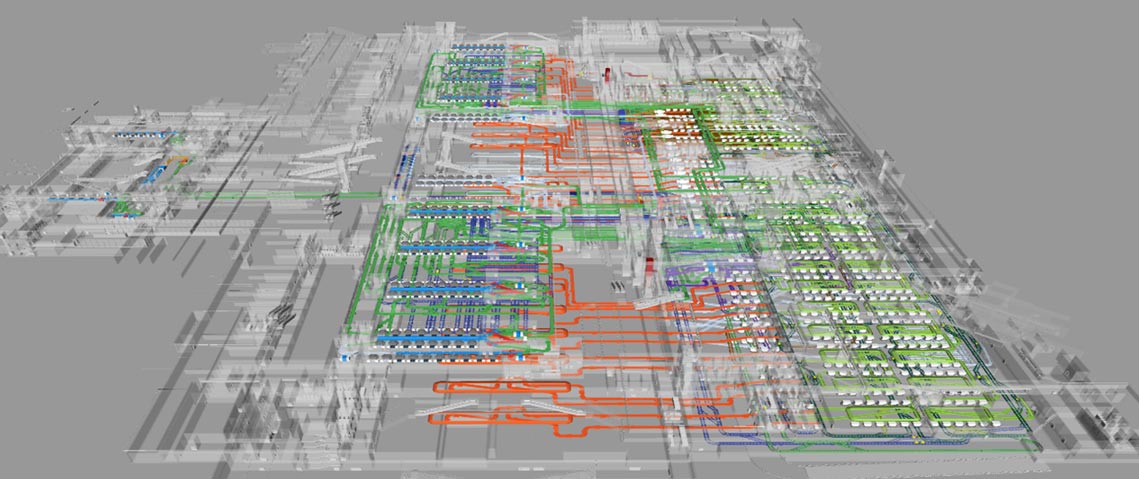
BNP a été engagé pour concevoir le système de traitement des bagages (BHS) pour le nouveau terminal. Cette mission comprend le développement de concepts et de plans détaillés pour tous les systèmes de bagages, l'intégration de la GTC dans le réseau de bagages du terminal et la planification d'une connectivité future avec un terminal satellite.

image overlay Schiphol International Airport (AMS) Terminal A Baggage Handling System
Systèmes de traitement des bagages

L'Europe

Système de traitement des bagages du terminal A de l'aéroport international de Schiphol (AMS)

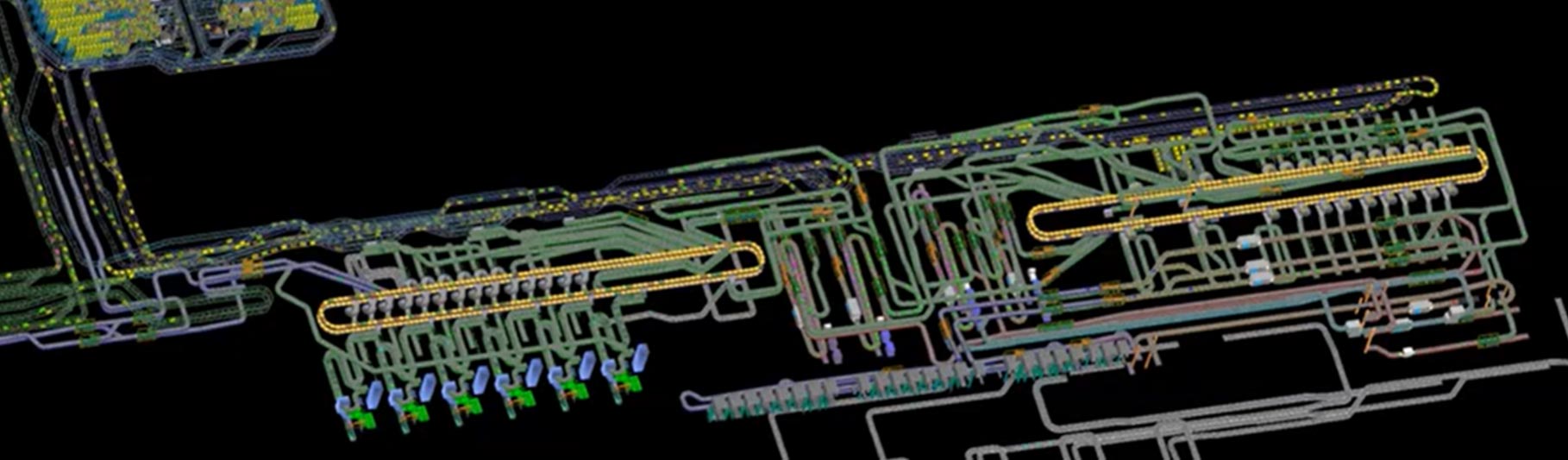
KAAN Architects a retenu BNP dans le cadre d'un consortium d'architecture et d'ingénierie pour la conception du nouveau terminal A de l'aéroport international de Schiphol à Amsterdam.

Un partenariat pour des résultats : Des mégaprojets aux succès de taille moyenne.

Tout en nous appuyant sur notre solide réputation, nous souhaitons mettre en avant notre capacité à fournir des solutions rentables pour des projets de taille moyenne, en formant nos clients aux dernières technologies et en garantissant leur réussite à long terme. Nous donnons la priorité à l'établissement de relations avec les clients, et pas seulement avec les clients, en travaillant souvent en étroite collaboration avec de petites équipes dans les départements de planification et de développement des aéroports afin d'obtenir des résultats exceptionnels.

Demande d'information Voir les projets

BNP Associates, Inc. est le leader mondial dans la fourniture de services de conseil spécialisés aux industries du transport aérien et de la logistique. 

© 2025 BNP Associates, INC. tous droits réservés