Zum Inhalt springen Datenschutz Seite
Zurück zu Projekte

Energy Management Studies

Tools for Identifying Energy Cost Savings

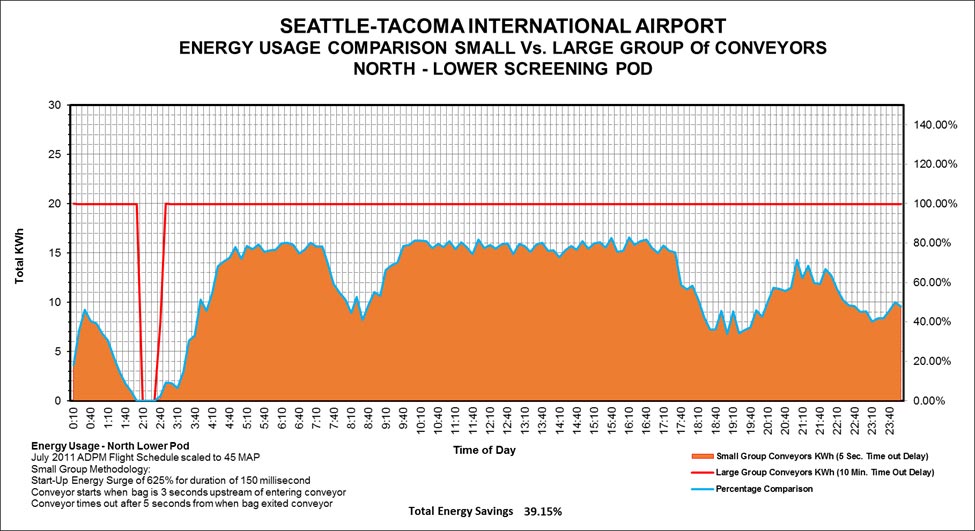
image overlay Chart showing energy usage comparison between small and large conveyor groups at Seattle-Tacoma International Airport.

Übersicht

The electrical power required by motors to operate conveyors in a baggage handling system (BHS) is essential for designing the overall BHS. In many systems, numerous conveyors grouped into zones are started simultaneously due to the motor control configuration, such as soft starters, known as Zone Methodology. In this configuration, multiple conveyors are activated simultaneously, and they run continuously until the zone has been cleared of bags for a specified period, typically 10 minutes or more. This approach can result in running a large number of conveyors to transport a small number of bags during off-peak hours. The implementation of Variable Frequency Drives (VFDs) throughout the BHS eliminates the need for conveyor zones, allowing for targeted control and increasing energy efficiency by running motors only when necessary.

Small Group Methodology

An alternative zoning strategy is the Small Group Methodology, where conveyors run only when bags are present. Downstream conveyors are activated seconds before bags reach them and deactivate a few seconds after the last bag exits. This method reduces unnecessary conveyor operation and achieves significant energy savings.

Simulation and Verification

BNP uses simulation to verify the benefits of the Small Group Methodology. This approach involves activating motors when a bag approaches within a certain distance (configurable to three seconds of travel time) and deactivating them after the last bag exits the conveyor, with varying sleep delays (1, 2, 3, 5, and 600 seconds) examined. In contrast, the Zone Methodology simulation set a fixed sleep delay of 600 seconds for all conveyors. Energy consumption for each method was calculated over a 24-hour period.

Results

The bag systems have been simulated using the Zone Method and the Small Group Method to quantify the runtime and the number of starts and stops of each conveyor. This data, combined with the motor energy requirements, is used to estimate the daily energy consumption of each approach. Simulations have identified opportunities to reduce airport energy costs by up to 33%. The graph below depicts the energy utilization for each methodology over the 24-hour study interval, showing significant energy savings with the application of the Small Group Methodology.


Projektstart

N/A

Kunde

N/A

Umfang der Dienstleistung

  • Energy Savings
  • Data Analysis
  • Operational Modeling Tool
  • Simulation

Region

N/A

Simulation Success Stories

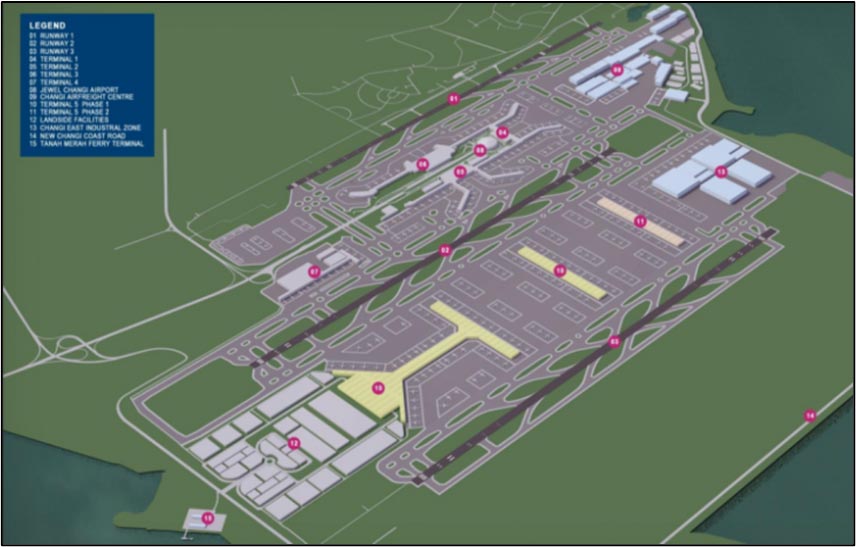
image overlay Changi International Airport (SIN) Terminal 5 Baggage Handling Systems
Gepäckabfertigungssysteme

Asien

Changi International Airport (SIN) Terminal 5 Gepäckförderanlagen

BNP wurde von der Changi Airport Group (CAG) beauftragt, Beratungsleistungen für das neue Gepäckfördersystem (Baggage Handling System, BHS) im neuen Terminal 5 zu erbringen, das Teil der Expansionspläne des Changi International Airport ist.

image overlay Xi’an Xianyang International Airport (XIY) New Terminal 5 Baggage Handling System
Gepäckabfertigungssysteme

Asien

Xi'an Xianyang International Airport (XIY) Neues Gepäckfördersystem im Terminal 5

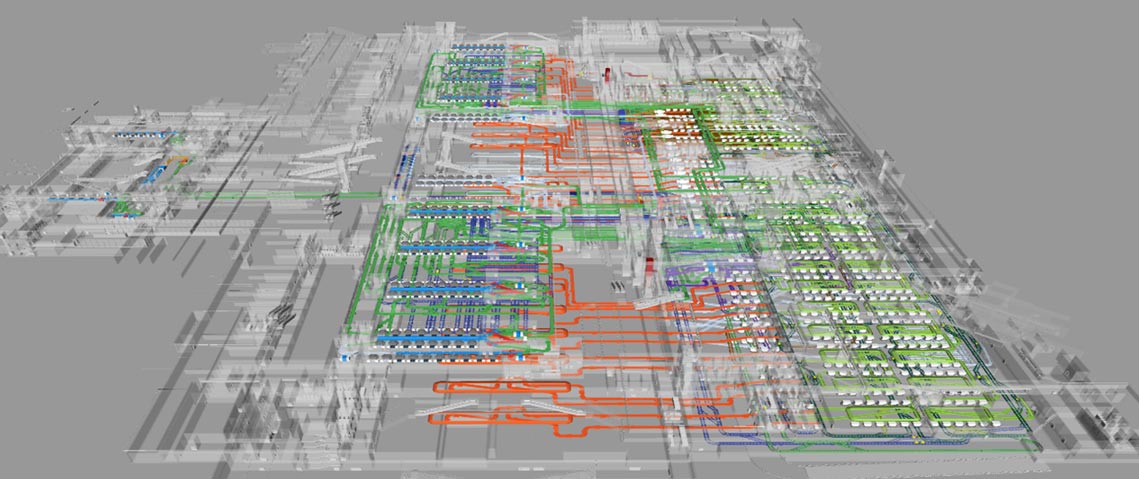
BNP wurde mit der Planung des Gepäckabfertigungssystems (Baggage Handling System - BHS) für das neue Terminal beauftragt. Der Auftrag umfasst die Entwicklung von Konzept- und Detailplänen für alle Gepäcksysteme, die Integration des GTC in das Gepäcknetzwerk des Terminals und die Planung einer zukünftigen Anbindung an ein Satellitenterminal.

image overlay Schiphol International Airport (AMS) Terminal A Baggage Handling System
Gepäckabfertigungssysteme

Europe

Schiphol International Airport (AMS) Terminal A Baggage Handling System

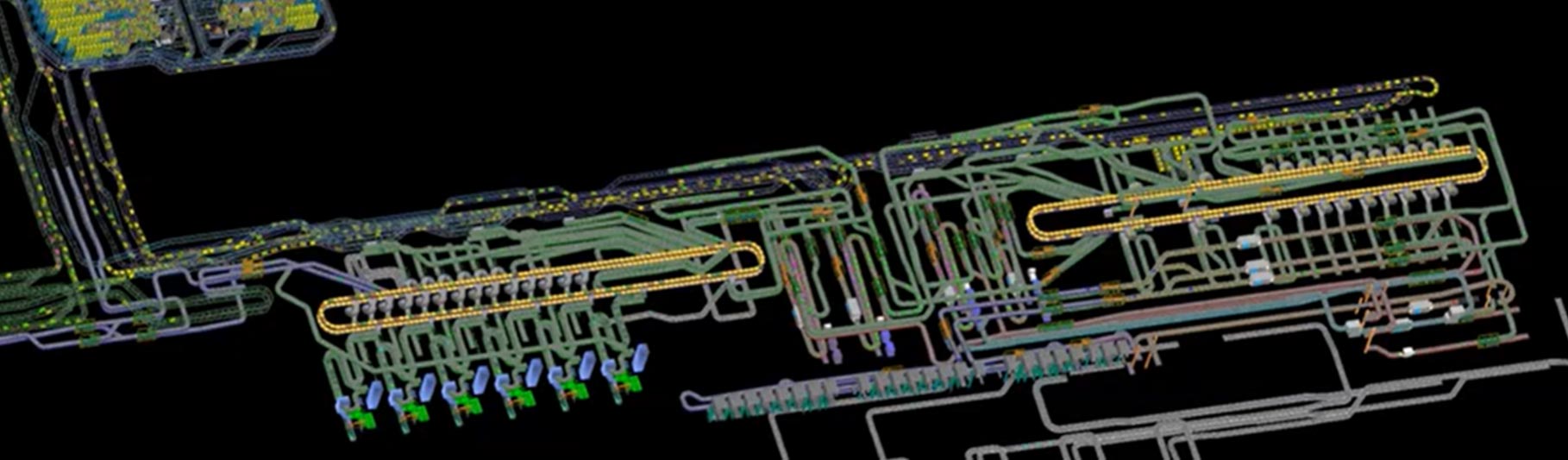
KAAN Architects retained BNP as part of an architecture and engineering consortium to design the new Terminal A at Schiphol International Airport in Amsterdam.

Partnerschaften für Ergebnisse: Von Mega-Projekten zum mittelgroßen Erfolg.

Auf der Grundlage unseres guten Rufs wollen wir unsere Fähigkeit unter Beweis stellen, kosteneffiziente Lösungen für mittelgroße Projekte zu liefern, unsere Kunden über die neuesten Technologien zu informieren und ihren langfristigen Erfolg zu sichern. Wir legen Wert auf den Aufbau von Beziehungen zu unseren Kunden, nicht nur zu den Kunden, und arbeiten oft eng mit kleinen Teams in den Abteilungen für Flughafenplanung und -entwicklung zusammen, um außergewöhnliche Ergebnisse zu erzielen.

Informationen anfordern Siehe Projekte

BNP Associates, Inc. ist der weltweit führende Anbieter von spezialisierten Beratungsdienstleistungen für die Luftverkehrs- und Logistikbranche. 

© 2025 BNP Associates, INC. alle Rechte vorbehalten